CategoriesSocks

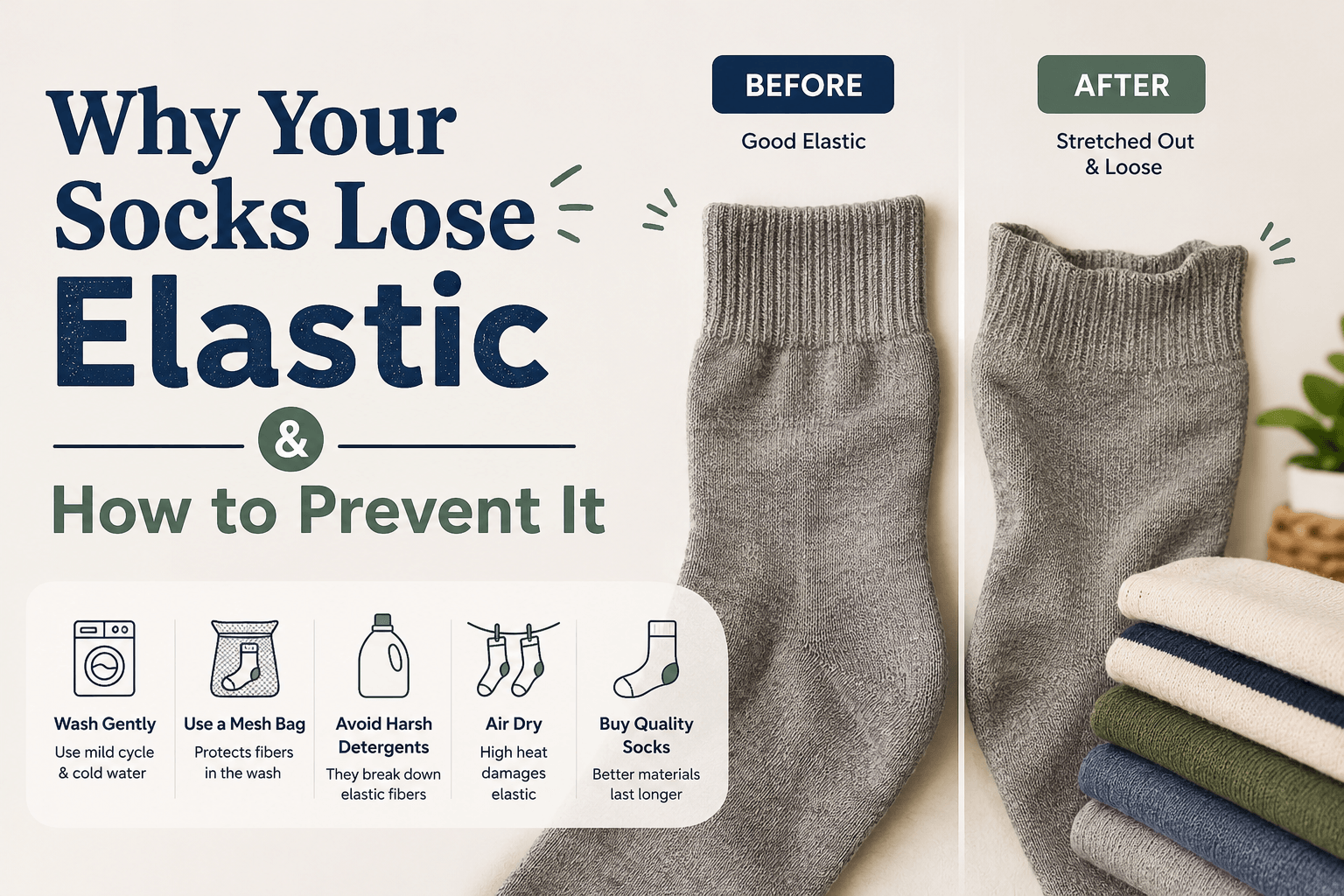
Why Your Socks Lose Elastic & How to Prevent It

Some socks just give up after a few months. You put them on in the morning, and by lunch, they have slipped down inside your shoes. Or the top band is loose and keeps rolling down your calf or ankle. Annoying, right? You pull them back up. Five minutes later, same thing.

This happens because the elastic inside the socks wears out. What surprised me is that most people don’t know you can slow this down. They just throw away old socks and buy new packs every few months.

So, here is what is really going on and how you can stop it from happening so fast.

What actually makes socks stretchy

You might think socks are just cotton or bamboo. But there is a little bit of elastic material hidden inside the fabric. Usually, spandex, elastane, or thin rubber threads are wrapped around the main fiber.

That stuff is what keeps the sock snug around your foot and ankle.

But elastic does not last forever. It gets tired. Every time you wear a sock, those tiny elastic fibers stretch. Then you wash them, and they relax again. Do this hundreds of times, and eventually they lose the ability to snap back. The sock stays loose.

The real question is not if your socks lose elastic, but how fast.

Why do socks lose elastic faster than they should

Here are the main reasons. Some of them might surprise you.

  • Hot water washing

Elastic does not like high heat. When you wash socks in hot water, the elastic fibres break down faster. The rubber and spandex get damaged. Within a few hot washes, the sock starts feeling loose.

  • Machine drying on high heat

This is the biggest killer of elastic. The tumbling and the high heat stretch out the fibres permanently. A dryer can ruin a good pair of socks in just a few cycles.

  • Overstretching when putting them on

Some people pull the top of the sock too wide when wearing them. That constant overstretching weakens the elastic threads. Over months, they do not bounce back.

  • Old age

Even with perfect care, an elastic does not last forever. After about 6 to 12 months of regular use, most socks start losing their grip. That is normal.

  • Poor quality socks

Cheap socks use low-grade elastic. It breaks down much faster. You might save money upfront, but you end up replacing them every two months.

How to prevent your socks from losing elastic

The good news is you can slow this down a lot. Here is what actually works.

  • Wash in cold or warm water, not hot

Cold water is gentle on elastic. It cleans well enough for socks. If you must use warm water, keep it below 40 degrees Celsius. Hot water is the enemy.

  • Skip the dryer

This one is hard for many people because dryers are convenient. But air drying your socks makes a huge difference. Hang them on a drying rack or a clothesline. The elastic lasts twice as long. If you must use a dryer, use the lowest heat setting.

  • Do not use fabric softener

Fabric softener coats the fibres and makes them feel soft, but it actually damages the elastic over time. It breaks down the spandex and rubber threads. Skip it. Your socks will stay stretchy longer.

  • Pull socks on gently

Do not yank the top band wide open. Roll the sock down a little, put your toes in, then roll it up. It takes two extra seconds but saves the elastic.

  • Buy better quality socks

This is worth saying. Good socks use higher-grade elastane or spandex. They last much longer. Yes, they cost more upfront, but you replace them less often. In the long run, you save money.

  • Rotate your socks

Do not wear the same three pairs every week. Give them a day to rest between wears. The elastic fibres need time to recover their shape.

Signs that your socks have lost elastic

How do you know when it is time to throw them away?

  • The sock slides down inside your shoe while walking
  • The top band leaves no mark on your skin (it should leave a light indent)
  • You can pull the top band very wide without any resistance
  • The sock bunches up under your heel

Once your socks lose elastic to this point, there is no fixing them. Time to buy new ones.

How long should good socks last?

With proper care, a decent pair of socks should last 6 to 12 months of regular use. If you wash in cold water and air dry, you can push that to 12 to 18 months. Cheap socks? Maybe 2 to 3 months.

Your washing and drying habits matter more than the brand name.

Final thoughts

Elastic wear is not something you can stop completely. But you can slow it down a lot. Wash in cold water. Skip the dryer. Do not use fabric softener. Pull them on gently. Buy better quality.

Small changes in how you care for your socks will save you money and frustration. No more pulling up slipping socks every few minutes.

Now you know why your socks lose elastic and how to prevent it. Try these tips for a month and see the difference.

FAQs

  • Why do my socks keep losing elastic so fast?

Most likely, you are washing in hot water or using a dryer on high heat. Both damage elastic fibres quickly.

  • Can I fix socks that have lost elastic?

No. Once the elastic is permanently stretched, you cannot fix it. Time to buy new socks.

  • How do I wash socks to protect elastic?

Use cold water, skip fabric softener, and air dry instead of using a machine dryer.

  • Does fabric softener really damage sock elastic?

Yes. Fabric softener breaks down spandex and rubber threads over time. Avoid it for all stretchy clothing.

  • How long should good-quality socks last?

With proper care, 6 to 12 months of regular use. With air drying and cold water, up to 18 months.

  • Are expensive socks better for elastic life?

Generally yes. They use higher-grade elastane and spandex. Cheap socks use low-quality elastic that fails faster.

  • Can I put socks in the dryer on low heat?

Low heat is safer than high heat, but air drying is still best. Heat in any form slowly damages elastic.

  • How do I know if my socks are too loose?

If they slide down inside your shoe or bunch up under your heel, the elastic is gone.
CategoriesSocks

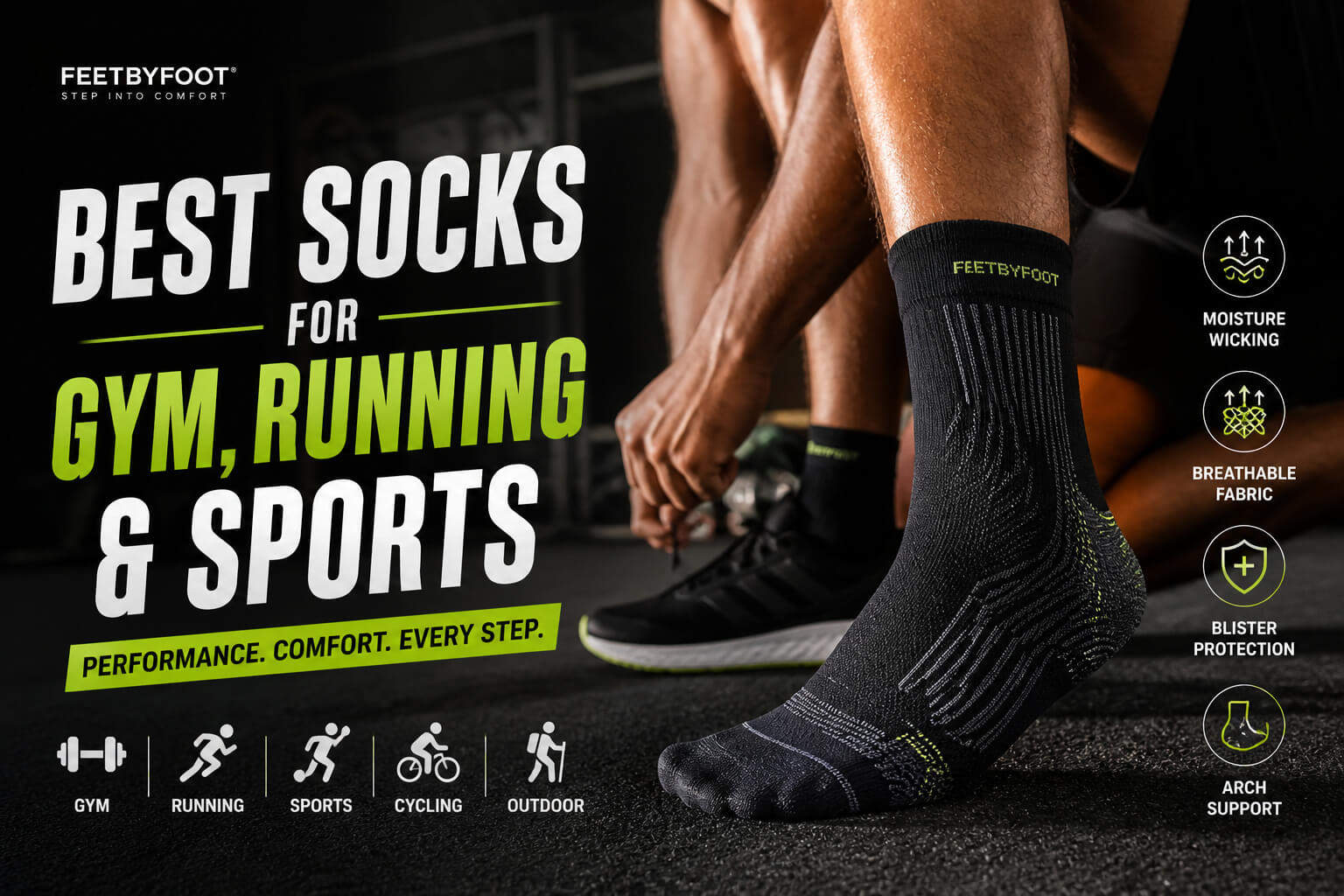
Best Socks For Gym, Running & Sports

Most people don’t think about socks before a workout. They just pick whatever is clean. And then during the run or the gym session, they feel it. The feet are getting slippery inside the shoes. That hot spot on the heel. The smell later.

I have been there. And after trying a bunch of different socks, here is what I learned: the best socks for gym, running & sports are not the same as your everyday cotton pair. They actually make a difference.

Why your regular socks are letting you down

Cotton is fine for sitting at home or going to the office. But for sports? It fails. Here is why.

When you run or lift weights, your feet sweat. Cotton holds that sweat. Now you have wet fabric rubbing against your skin. That causes blisters. It also creates a damp environment inside your shoe. Bacteria love that. Next thing you know, your shoes smell, and your feet feel gross.

So, if you are serious about your workout, you need socks that handle sweat properly.

What actually works for sports socks

Over time, I have figured out what to look for. Keep these things in mind next time you buy.

  • The material matters most

Stay away from cotton. Look for merino wool, bamboo, polyester, or nylon. These fabrics pull sweat away and dry fast. Your feet stay dry even after an hour of running.

  • Padding in the right spots

When you run or jump, your heel and the ball of your foot take most of the impact. Good sports socks have extra cushioning there. Not everywhere, just where you need it. Too much padding everywhere makes your feet hot.

  • A snug fit around the arch

Some socks have a slightly tighter band in the middle. That small thing helps a lot. It stops the sock from sliding around. It also supports your foot so you feel less tired after a long session.

  • Airflow matters

You will see some socks with mesh or small holes in certain areas. That is not for style. That is for letting heat escape. Feet stay cooler and drier. Trust me, during a summer run, you will notice the difference.

Which material should you pick?

Here is my simple take.

  • Merino wool: Do not let the word wool scare you. Merino is thin and breathable. It keeps odour away naturally. Great for long runs or days when you are on your feet for hours.
  • Bamboo: Very soft. Naturally fights bacteria. Works well for gym workouts and casual sports. Also feels nice if you have sensitive skin.
  • Polyester or nylon blends: These dry the fastest. Most running socks use these. They also stretch well and last through many washes.

Different socks for different activities

You do not need ten different types. But a little matching help.

  1. For weight training at the gym: You want a snug fit and good cushioning. But do not go too thick. Thick socks can make your training shoes feel tight, and that messes with your balance.
  2. For running: Lightweight is key. Look for cushioning under the heel and toe. Many runners also like a little tab at the back. That tab stops the shoe from rubbing against your Achilles tendon. Small thing, big comfort.
  3. For court sports like tennis or badminton: You move side to side a lot. So, you need socks that stay in place. Arch support helps. Extra material in high-friction areas like the heel and toe also helps.
  4. For general gym use: If you do a bit of everything, just get a good mid-weight moisture-wicking sock. Bamboo or a synthetic blend works fine.

A few habits that help

Even the best socks for gym, running & sports need some care. Otherwise, they wear out fast.

Wash them inside out. That gets rid of sweat and bacteria properly. Do not use fabric softener; it messes up the moisture-wicking ability. Air-dry them if you can. Heat from a dryer breaks down the elastic and the padding. And replace them every 6 to 12 months if you use them regularly. Worn socks lose their shape and their cushioning.

One more thing about fit

Too loose and the sock bunches up inside your shoe. That is a blister waiting to happen. Too tight and it feels uncomfortable and restricts blood flow. The right fit feels snug but not too tight. Your toes should have a little room.

Final thoughts

Look, your feet carry your entire body through every workout. They deserve better than old cotton socks. Spending a little time finding the best socks for gym, running & sports is worth it. You will get fewer blisters, less smell, and your feet will feel fresher after a hard session.

Try it. Small change, big difference.

FAQs

  • What are the best socks for gym, running & sports?

The best socks for gym, running & sports are made of merino wool, bamboo, or synthetic blends like polyester and nylon. They keep your feet dry and reduce blisters.

  • Can I wear cotton socks for running?

No. Cotton holds sweat and stays wet. That leads to blisters and odour.

  • How often should I change my sports socks?

Every 6 to 12 months, depending on how much you use them. Worn socks lose cushioning and fit.

  • Do expensive sports socks make a difference?

Not always. Look for material, cushioning, and fit. Price does not guarantee quality.

  • Are bamboo socks good for sports?

Yes. Bamboo socks are breathable, soft, and naturally fight bacteria. Good for gym and light running.

  • Should I wear thick or thin socks for running?

Depends on your shoes. Thin socks work with snug shoes. Thicker ones with cushioning are better for long distances.

  • How do I prevent blisters while running?

Wear moisture-wicking socks that fit well. Keep your feet dry. Break in your shoes slowly. And avoid cotton.

  • Can I use the same socks for gym and running?

For most people, yes. A good mid-weight moisture-wicking sock works for both. Serious runners may still prefer dedicated running socks.

CategoriesSocks

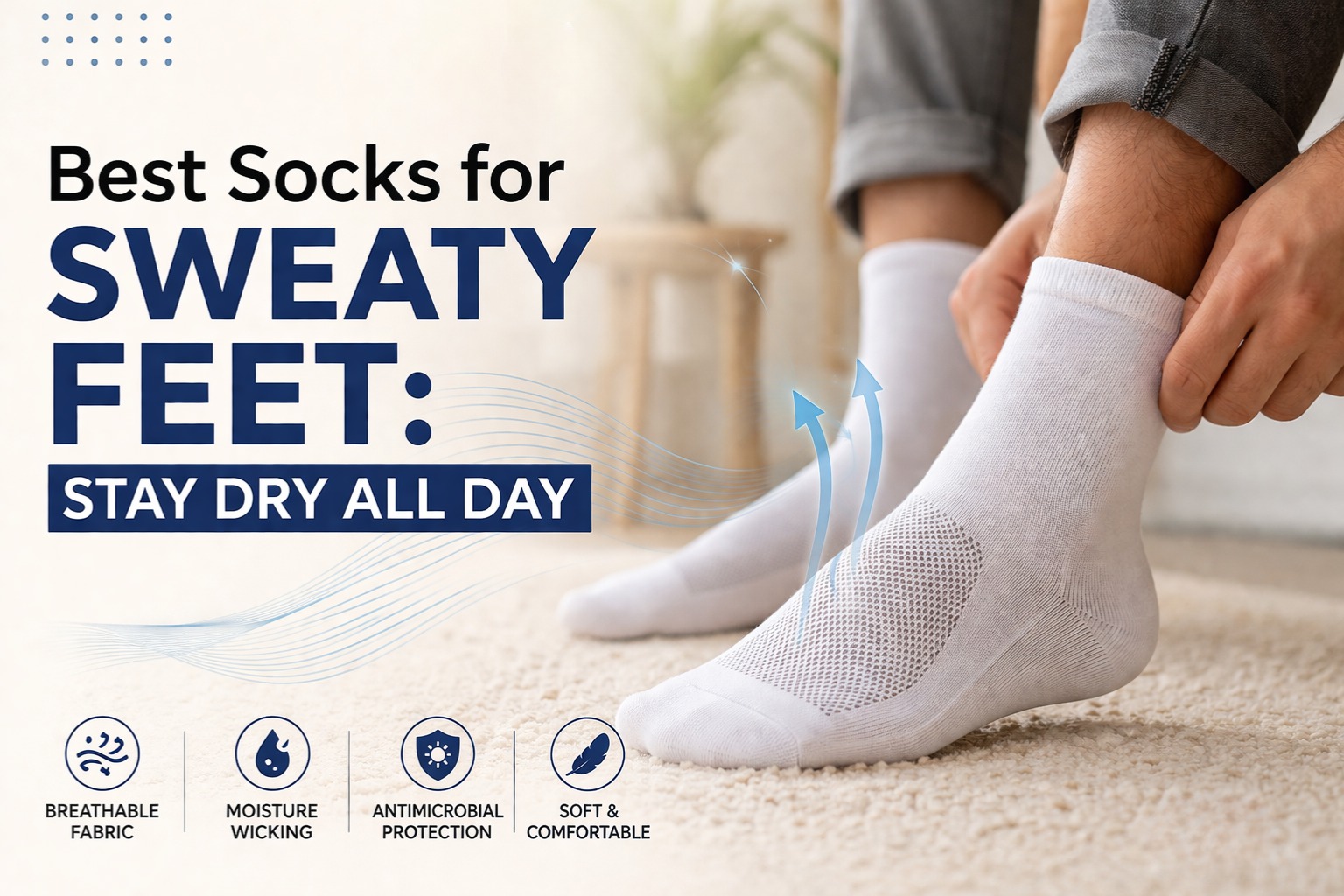
Best Socks for Sweaty Feet: Stay Dry All Day

Let me tell you straight, sweaty feet are annoying. You take off your shoes at the end of the day, and it feels like you walked through a puddle. Even your good shoes start smelling. And if you live anywhere with humidity, it gets worse.

I’ve been there. So, I spent time figuring out what actually works. And the short answer is this: the best socks for sweaty feet can completely change how your feet feel by evening.

Why do feet sweat so much anyway?

Feet just sweat more than other body parts. That’s how they’re built. The problem starts when that sweat has nowhere to go. If your shoes don’t breathe, moisture stays inside. And then bacteria grow. That’s where the smell comes from. Sometimes infections, too.

That’s why moisture-wicking and breathable socks matter. They don’t stop your feet from sweating, but they pull that sweat away so your feet stay dry.

What actually matters when buying socks for sweaty feet

Don’t just grab any pack from the store. Look for these four things:

  • Material

Stay away from cotton socks. I know it’s soft. But cotton soaks up sweat and stays wet for hours. Instead, look for merino wool, bamboo, polyester, or nylon; these dry fast.

  • Airflow

Some socks have mesh panels or tiny ventilation zones. That’s not a design gimmick. That’s air getting in and heat getting out. Makes a big difference.

  • Smell control

Some socks are made with fibers that stop bacteria from growing. Merino wool does this naturally. Some bamboo socks, too. Fewer bacteria means less smell.

  • Fit

Too loose and you get blisters. Too tight and you’re uncomfortable. Snug fit is what you want. Cushioning is good, but don’t go for thick socks unless they’re made for sweat.

Best materials for sweaty feet

Here’s what works based on my experience and what I’ve seen others use successfully:

I know. Wool sounds hot. But merino wool is different. It’s thin, it breathes, and it pulls sweat away. Plus, it doesn’t hold on to smells. Great for long days.

  • Bamboo

This one is really good for Indian weather. Bamboo socks are soft, they breathe well, and they’re naturally good at fighting bacteria. Very comfortable in the heat.

  • Synthetic blends (polyester or nylon)

These dry faster than anything else. That’s why most sports socks use them. If you’re running or working out, this is a solid choice.

Which socks for which situation?

Not everyone needs the same thing. So, here’s a simple breakdown:

  • For sports or the gym

Get athletic socks. They manage moisture, give some arch support, and let your feet breathe.

  • For office or formal wear

You don’t have to suffer just because you’re wearing dress shoes. Look for thin merino wool or synthetic dress socks. They look normal, but keep your feet dry.

  • For everyday use

Going to college, working from home, or just running errands? Bamboo or blended socks with light padding work really well.

Small habits that help a lot

Even the best socks for sweaty feet can’t do everything on their own. These habits make a real difference:

  • Don’t wear the same shoes every day. Give them time to dry out.
  • Foot powder helps. Just a little. Absorbs extra sweat and cuts down on smell.
  • Wash your feet daily and dry them properly. Especially between the toes.
  • Keep your toenails trimmed. Less moisture gets trapped that way.
  • If your feet sweat heavily, carry an extra pair of socks. Changing once during the day feels amazing.

Mistakes people make

I’ve made most of these myself at some point. Learn from my mistakes:

  1. Wearing cotton socks all day long
  2. Buying cheap shoes that don’t breathe
  3. Putting on socks that are still damp from before
  4. Just ignoring foot hygiene and hoping it gets better

You don’t have to do anything complicated. Small changes work.

Final thoughts

Look, sweaty feet are not something you just have to live with. Finding the best socks for sweaty feet is worth your time. Pick the right material. Get the fit right. Keep your feet clean. That’s really it.

You’ll notice less smell, fewer blisters, and your feet won’t feel like a mess by the end of the day. Give it a shot.

FAQs

  • Which socks are best for sweaty feet?

The best socks for sweaty feet are made of merino wool, bamboo, or synthetic blends like polyester and nylon. They pull sweat away and dry fast.

  • Are cotton socks bad for sweaty feet?

Yes. Cotton socks hold onto sweat and stay wet for a long time. Not a good choice.

  • Do moisture-wicking socks actually work?

Yes. Moisture-wicking socks pull sweat away from your skin and dry quickly. Less dampness, less smell, fewer problems.

  • Do sweaty feet cause a bad smell?

Yes. Bacteria grow in the moisture and produce that odour. Control the moisture, and you control the smell.

  • Are there socks that stop foot odour?

Yes. Look for socks with antimicrobial properties or materials like merino wool and bamboo.

  • What’s the best material for hot weather?

Bamboo and lightweight merino wool. Both breathe well and handle heat and sweat effectively.

  • Are thick socks good for sweaty feet?

Not usually. Thick socks trap heat unless they are specifically designed for moisture-wicking.

  • Can wrong socks cause foot problems?

Yes. Blisters, fungal infections, and bad odour all of these get worse with the wrong socks.

  • One simple tip to keep feet dry all day?

Wear moisture-wicking socks, choose breathable shoes, wash and dry your feet properly, and use foot powder. Works every time.

0
    0
    Your Cart
    Your cart is emptyReturn to Shop
    Add to cart